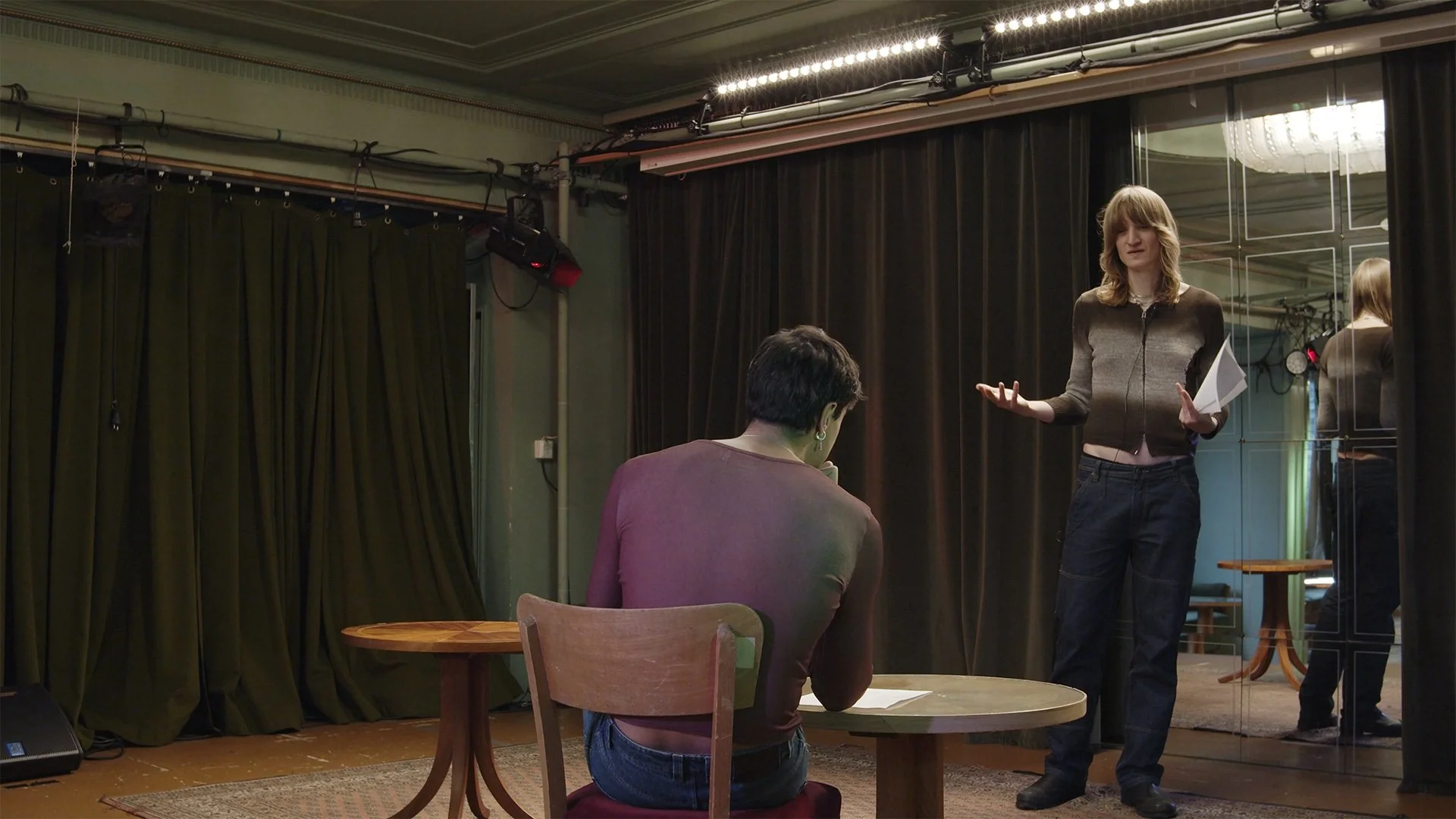
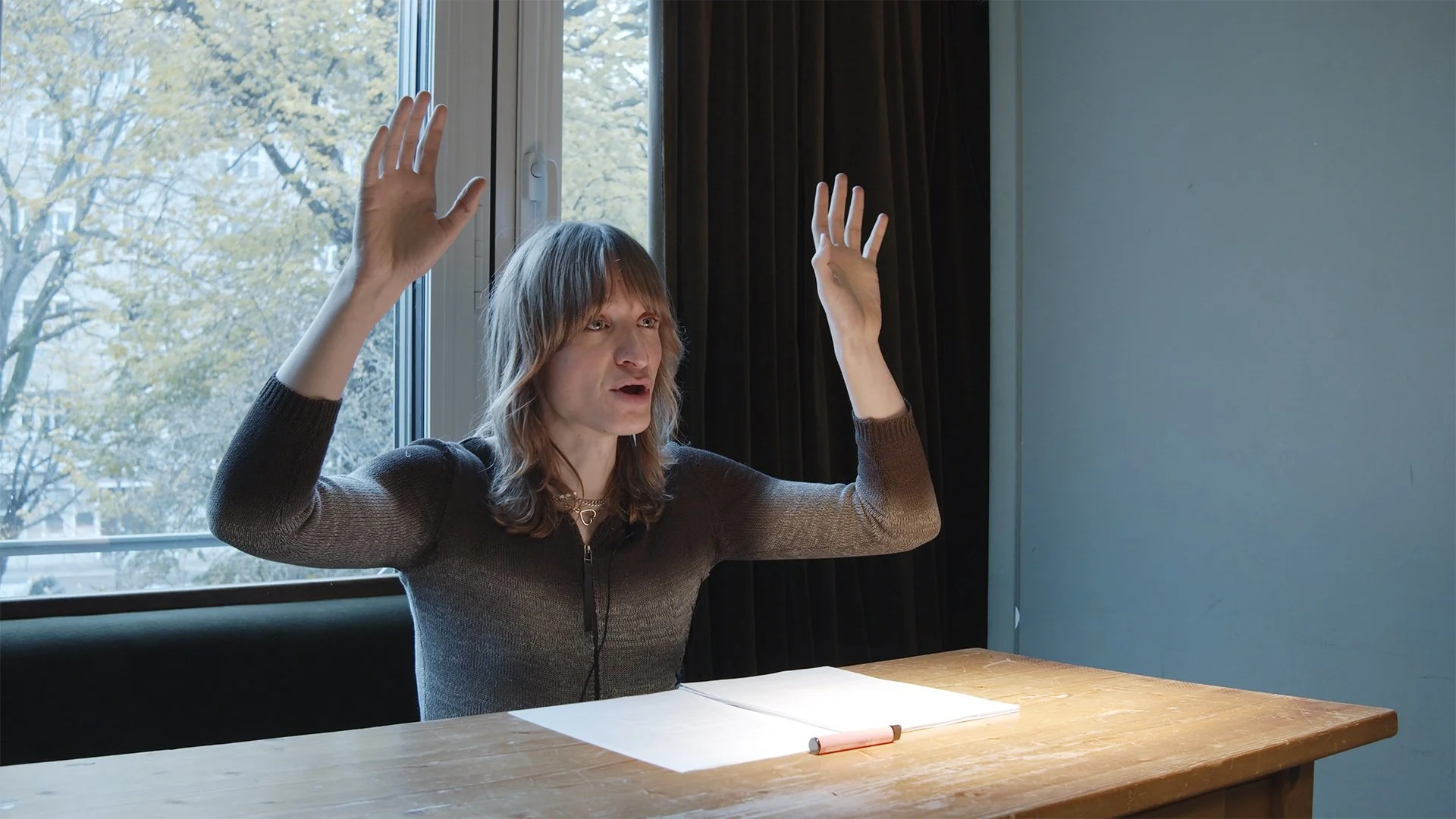
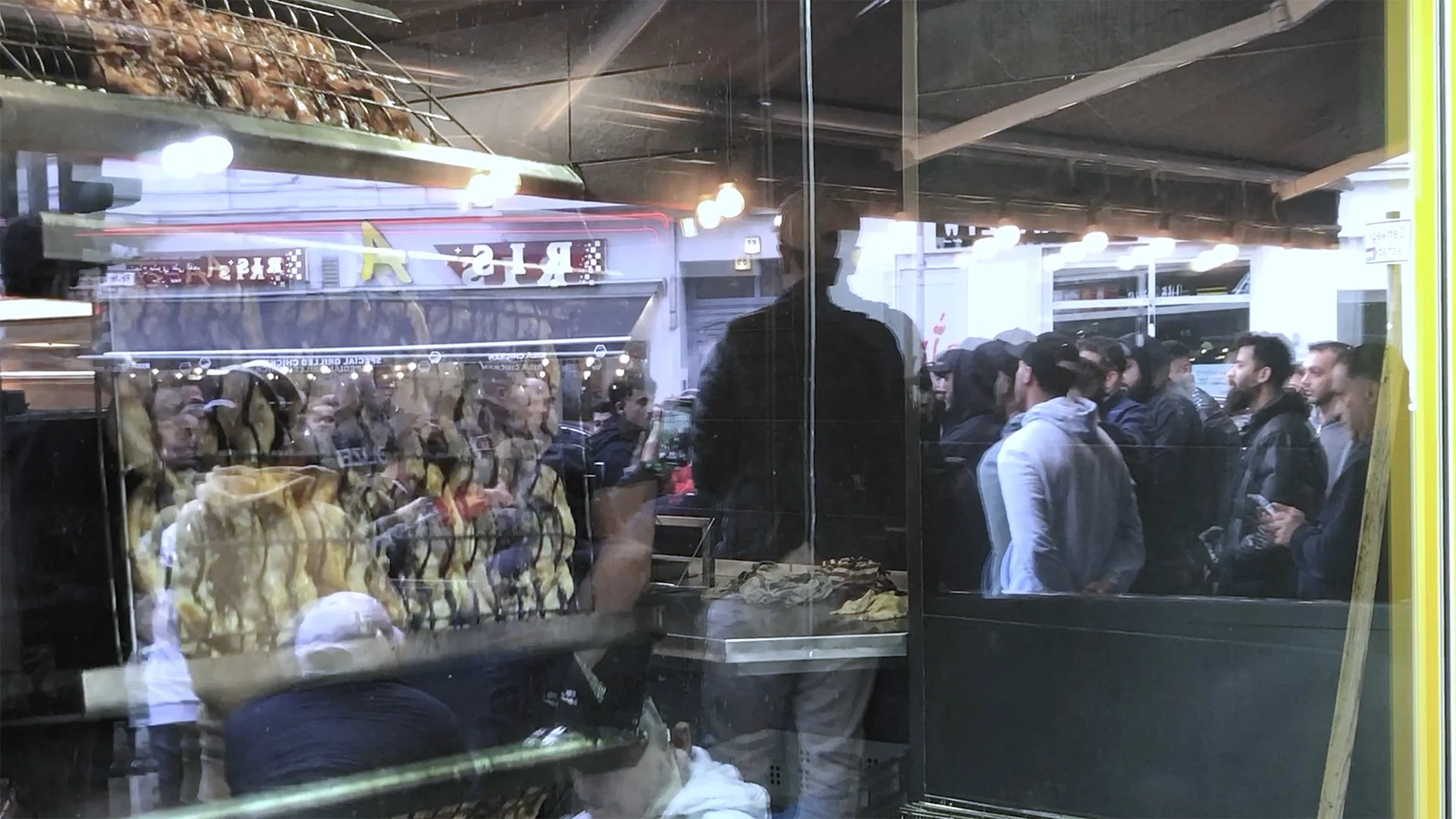
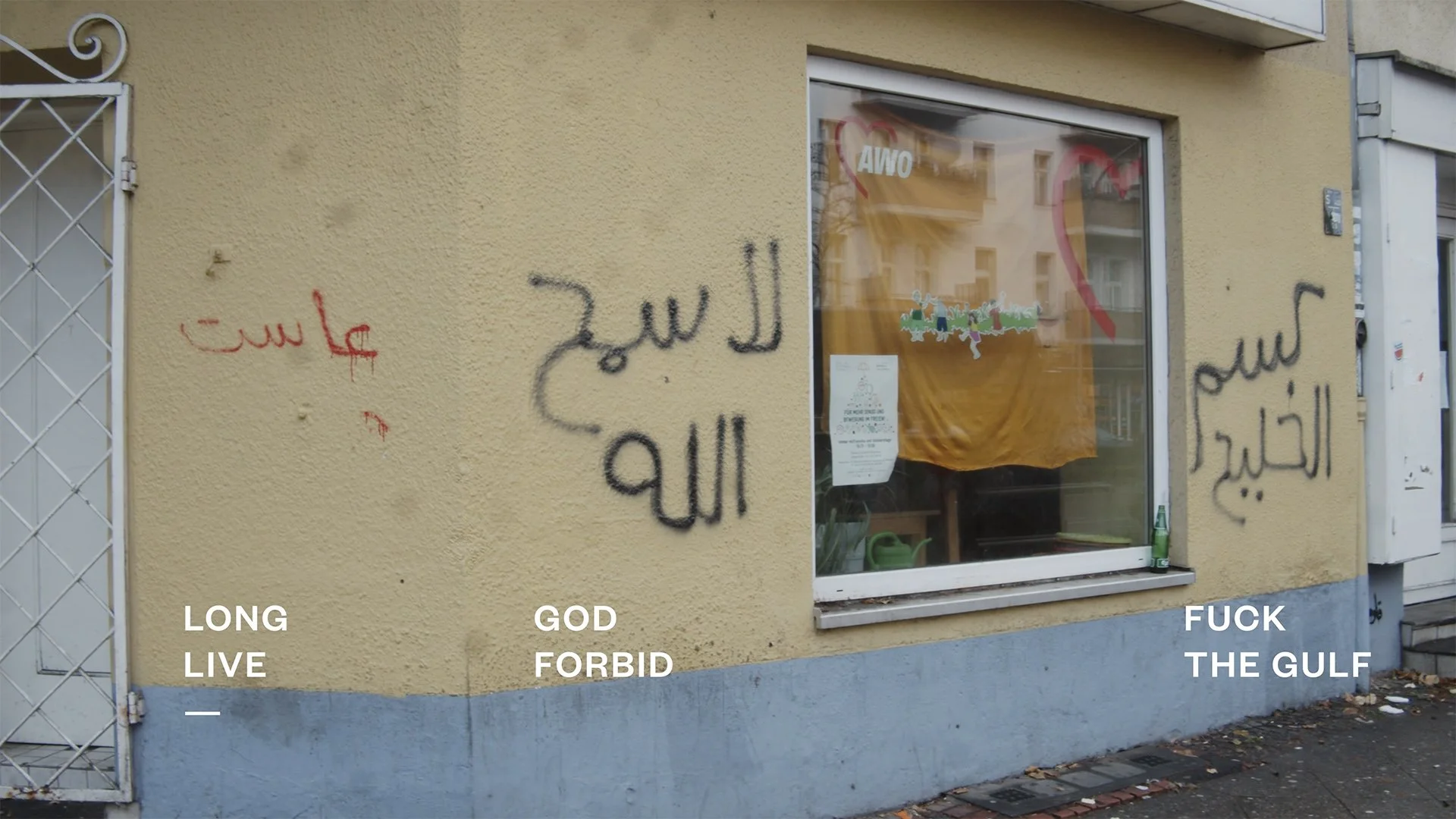
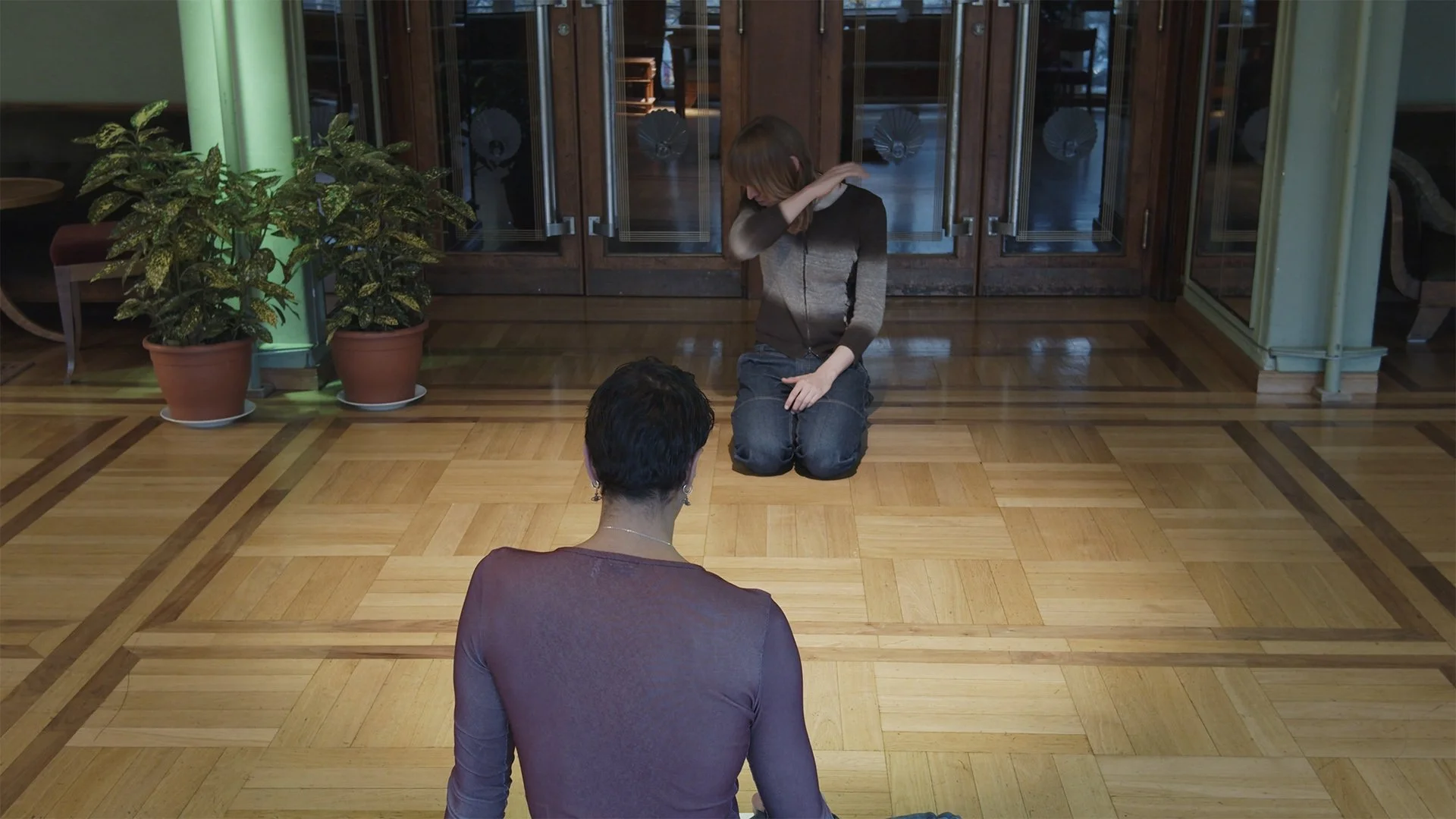
Fateless is a video made in October 2023 with Berlin-based writer Maxi Wallenhorst, functioning as an open rehearsal for a film in progress. It attempts to make tangible the city as an object neither reducible to its geographical location (Berlin) nor to its historical timestamp (the present, roughly)—which is to say, as the actually existing city as we move through it every day, with its screaming contradictions, mute compulsions, and unbearably literal prisons. This city, everyone knows, is populated by a set of strange characters. In fact, to call them “strange” risks downplaying how fundamentally the city depends on them too, how the city inhabits them. They know that the city sits atop a system of tunnels, populated by the Ghosts of Christmas Yet to Come and not just of Christmas Past.
Among these figures you would find a security guard, an angel, someone in line at Ausländerbehörde, or even fear itself. A city dweller walks by a solidarity march, wags a finger, yells: “TERRORISMUS!” One of the ghosts haunts a cruising site for fun. The tourist is disappointed as the city’s realness crushes her fantasy, only to later reveal an impossibility she could never have dreamt. One wouldn’t be mistaken to think, “Wait, this is so Berlin,” or “So 2023”; Fateless, however, attempts to rehearse these figures as they defy descriptors, beyond their seeming status as NPCs (a “non-playable character” in a game that cannot be inhabited by the player). In this sense, in the spirit of both reality TV and dialectics, the film sets out to stage an antagonism between the city’s allegorical inhabitants. Some puns, high-concept misunderstandings, and trauma plot twists ensue. A particular kind of character work explores how it is that the tightropes of a psychological person, symbol, allegory, and non-playable character are tread.
The promise of the city is not that our fates are all connected, it’s that they are not. It is not the shared fate of the city’s figures that paves a way out, but the way in which they try to escape it.